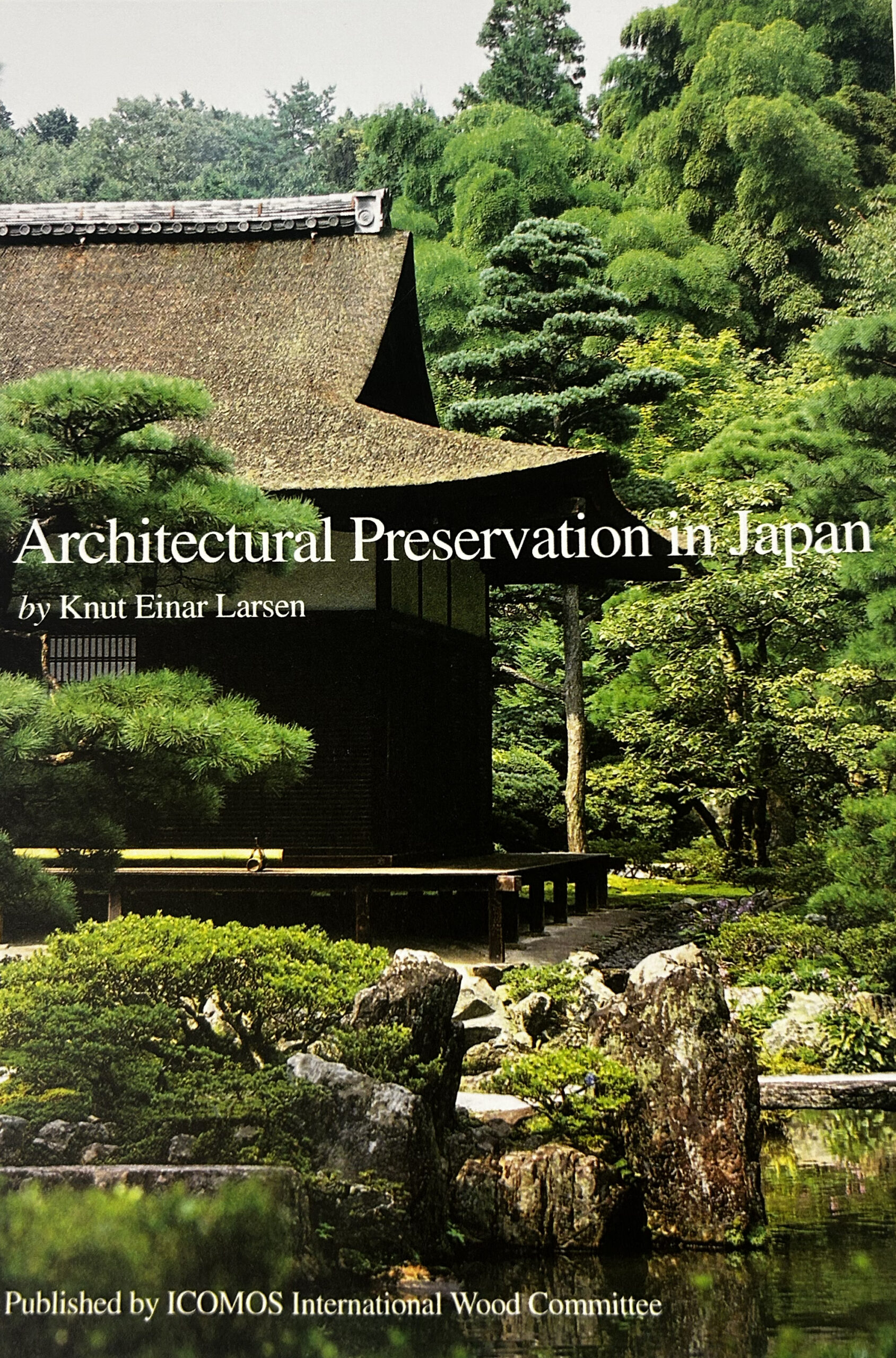
Professor Knut Einar Larsen of the Norwegian University of Science and Technology (NTNU) has studied wood architecture and architectural preservation in Japan and Norway for many years. It all started with an SJSF grant in 1989. “The grant enabled me to start a long-lasting cooperation with Japanese colleagues. I can safely say that without the grant, my professional career would indeed have looked different.”
The first contacts opened other doors. With a Japan Foundation long-term fellowship in 1989/1990, Larsen spent a year in Japan studying theories and methods in Japanese architectural preservation. He worked with experts at the Ministry for Cultural Affairs, the Japanese Association for Conservation of Architectural Monuments and the national research institutes for cultural properties in Tokyo and Nara.
The study gave him an understanding of the Japanese approach to preservation, which had not yet been acknowledged in the West. Since both Japan and Norway have an architectural heritage of timber structures, his background helped him understand the Japanese working methods. As these methods became known among Western experts through his publications and presentations, the Japanese government, in Larsen’s words, felt safe to ratify the UNESCO World Heritage Convention.
In 1996, the Japanese Institute of Architects awarded him the Cultural Appreciation Prize, the first time it went to a foreigner. “However, it was the initial grant from the Scandinavia-Japan Sasakawa Foundation that catalysed my work in Japan.”